
Why Is My Labrador Puppy Suddenly So Bad?


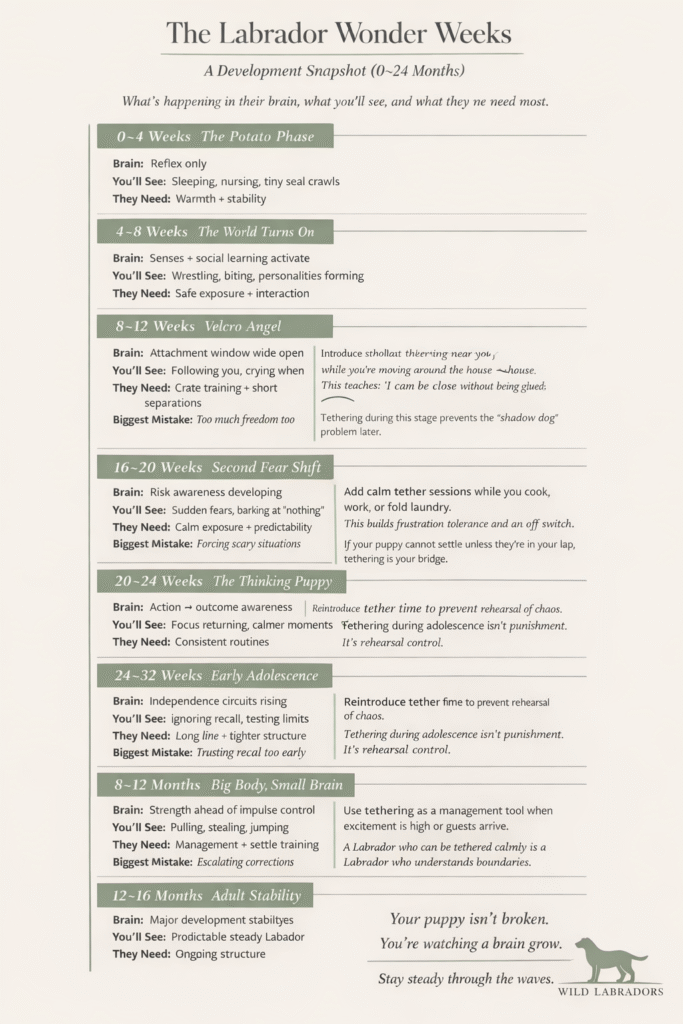
What’s Actually Happening at Each Stage (0–24 Months)
What’s happening in their brain, what you’ll see at home, and how to stay steady through it.
If you’re staring at your Labrador right now thinking,
“Who are you… and where did my sweet puppy go?”
Take a breath.
Nothing is wrong.
Labradors don’t grow in a straight line.
They grow in waves.
Sometimes, your Labrador may seem like a bad puppy, but it’s important to remember that this behavior is often temporary.
And every wave can feel like a different dog moved into your house.
This guide walks you through those waves intentionally, so when things change, you understand why. And you don’t take it personally.
Because most puppy stress doesn’t come from behavior.
It comes from confusion.
The One Rule That Fixes 80 Percent of Puppy Stress
Stop asking:
“Why is my dog like this?”
Start asking:
“What just changed in their brain?”
When you understand the stage, you stop reacting emotionally.
You start guiding development.
That shift changes everything.
Weeks 0-4: The Potato With a Heartbeat
What’s happening in their brain
Reflex only. They can’t see. They can’t hear. Their nervous system is barely online.
What you’d see (breeder side)
Sleeping
Nursing
Tiny seal crawls
Zero training potential
What matters most
Warmth
Clean space
Steady weight gain
Gentle handling
This stage builds physical stability. Puppies who feel safe in their body early often handle stress better later.
There is no discipline here. Just development.
Weeks 4-8: The World Turns On
What’s happening in their brain
Senses activate. Social learning explodes. Bite inhibition begins forming.
What you’d see
Wrestling
Tumbling
Barking at littermates
Tiny personality sparks
What they’re learning
How hard is too hard
What play feels like
How to recover from stress
This is where resilience begins. Not dominance. Not hierarchy. Resilience.
Weeks 8-12: The Velcro Angel Phase
What’s happening in their brain
Attachment window wide open. Fear system still immature. Everything feels exciting and safe.
What you’re probably feeling
“This is amazing. I got the perfect puppy.”
What you’re seeing
Following you everywhere
Sleeping in a pile at your feet
Crying when alone
Looking at you like you hung the moon
This is the honeymoon.
And it’s beautiful.
What to do right now
Crate daily
Short separation practice
Name recognition
Gentle handling of paws, ears, mouth
Start recall as a game
This is also where we introduce short, calm tether sessions during everyday life. Folding laundry. Making coffee. Moving around the house. Not long. Not strict. Just teaching them how to be near you without being glued to you.
Monica truth
Enjoy this softness. But build independence now. Future-you will thank you.
If your puppy is glued to your ankles, that’s biology. Not manipulation.
Weeks 12-16: The Confidence Before the Storm
What’s happening in their brain
Exploration spikes. Habits form fast. They begin testing predictability.
What you’re probably feeling
“Okay… that was new.”
What you’re seeing
Selective hearing beginning
Zoomies intensifying
Mouth on everything
Learning patterns, good and bad
What to do
Daily leash practice
Place training
Crate naps
Trade games
Calm greetings
Continue consistent tether time during normal household activity. This is where tethering helps prevent chaos habits before they become routine.
Monica truth
If your puppy feels chaotic right now, it’s usually one of two things.
Too much freedom
Too little sleep
A Labrador puppy needs a ridiculous amount of sleep. Miss that window and you get a gremlin.
Breathe. Structure fixes most of this.
Weeks 16-20: The Second Fear Phase
What’s happening in their brain
Risk processing upgrades. Memory becomes stickier. Awareness deepens.
What you’re probably feeling
“Why is my brave puppy suddenly scared of a trash bag?”
What you’re seeing
Barking at nothing
Startling at normal sounds
Hesitation where confidence used to live
What to do
Short walks
Calm voice
Pair new things with food
Increase predictability
No forcing
If indoor energy escalates, brief tether sessions can help interrupt pacing and nervous rehearsal.
Monica truth
This isn’t weakness. It’s awareness developing.
Your job isn’t to toughen them up. It’s to stay steady.
If this is your house right now, you’re not behind. This phase passes.
Weeks 20-24: The Thinking Puppy
What’s happening in their brain
Connections strengthen. They can think a little longer before reacting.
What you’re probably feeling
“Okay… we’re back.”
What you’re seeing
Slightly longer focus
Training sticking better
Moments of calm
What to do
Impulse control
Wait at doors
Sit for leash
Build routines
This is where consistency starts paying off.
Weeks 24-32: Early Adolescence
The “I Heard You” Phase
What’s happening in their brain
Independence circuits strengthen. Hormones warm up. Risk tolerance increases.
What you’re probably feeling
“Did my puppy forget everything?”
What you’re seeing
Recall fading
Ignoring commands
Jumping returning
Testing boundaries
What to do
Long line. Always.
Tighten structure
Reduce freedom
Increase mental work
Increase tether management inside the home. Adolescence is not the stage for more freedom. It’s the stage for clearer boundaries.
Monica truth
They’re not stubborn. They’re practicing autonomy.
Don’t argue. Manage.
If your 6–7 month old feels like a stranger, welcome to adolescence.
Months 8-12: Big Body, Small Brain
What’s happening in their brain
Motor skills ahead of impulse control.
What you’re probably feeling
“How are you this strong and still this ridiculous?”
What you’re seeing
Pulling
Counter surfing
Stealing items
More intensity
What to do
Baby gates
Teach settle
Structured transitions
Consistency
Tether strategically during high-energy windows or guest arrivals to prevent excitement from spiraling into rehearsal.
Management is training.
If they practice it daily, it becomes default.
Months 12-16: Teenage Peak
What’s happening in their brain
Hormones and confidence surge. Independence peaks.
What you’re probably feeling
“I thought we were past this.”
What you’re seeing
Selective hearing at its worst
Dog opinions forming
Boundary testing
What to do
Long line recall
Controlled socialization
Consistent expectations
Most Labradors need tighter structure here, not louder voices.
Months 16-20: The Maturity Turn
What’s happening in their brain
Impulse control strengthens. Emotional regulation improves.
What you’re probably feeling
“Oh… there you are.”
What you’re seeing
Longer calm stretches
Better recovery
Training holding
Reinforce calmness. Reward good defaults. Maintain boundaries.
Months 20-24: Adult Labrador Arrives
What’s happening in their brain
Major development stabilizes. Emotional resilience increases.
What you’re probably feeling
“So this is why everyone loves Labradors.”
What you’re seeing
Predictable obedience
Stable temperament
Confidence without chaos
You didn’t get lucky.
You guided development.
The 5 Things That Fix Almost Everything
Crate naps
Less freedom
Long line recall
Calm predictable routine
Train the off switch
A tired Labrador is great.
A Labrador who can settle is elite.
Tethering is one of the simplest tools for teaching that off switch.
If You’re In the Thick of It
Pause.
Your puppy is not broken.
You didn’t ruin them.
You didn’t get a bad one.
You’re watching a brain grow.
Guide each stage instead of fighting it.
Stay calm when they wobble.
Stay structured when they test.
And one day, you’ll look at your dog and realize the chaos settled into something steady, loyal, and deeply connected.
You just had to ride the waves.





 Weeks 1–3


Responses